
 Wei Perng, PhD, MPH For years, type 2 diabetes (T2D) has been treated as a single disease. If someone has high blood sugar but does not meet criteria for type 1 diabetes or another form of diabetes, they are diagnosed with T2D. But researchers are starting to rethink what we call “type 2 diabetes” as multiple distinct conditions that all lead to elevated blood sugar. 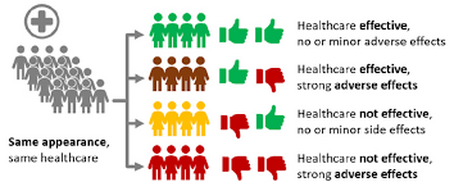 Why one size does not fit all.
As discussed in a recently published commentary, not everyone develops T2D in the same way. For some individuals, the problem starts with insulin resistance (when the body stops responding to insulin properly). This is often associated with obesity. For others, their bodies don’t produce enough insulin, sometimes due to genetics and/or environmental factors that damage the pancreas. These differences matter and provide hints on the sequence of biological events that culminate in disease. A study in European populations suggest that these differences may help explain why some T2D patients manage their diabetes with lifestyle changes, others require medications, and some develop serious complications – like kidney or heart disease, or even early mortality. Identifying distinct root causes, as well as the progression of biological events responsible for high blood sugar is key to the effective prevention, treatment, and management of T2D – and can look very different from person to person. The DEFINE-T2D Consortium. To better understand this complexity, the National Institute of Diabetes and Digestive and Kidney Diseases (NIDDK) launched the Definition, Etiology, Function: INtegration to Enhance T2D treatment (DEFINE-T2D) Consortium in 2024. This large research effort brings together data from 13 observational cohort studies, 4 randomized controlled trials, and 6 electronic health record systems and biobanks. Together, these resources include information from more than 4.8 million individuals, many with prediabetes or established T2D. The scale of the project gives researchers an unprecedented opportunity to better understand different forms of T2D. DEFINE-T2D researchers are examining multiple layers of information, including traditional clinical measures (such as blood sugar levels, blood pressure, weight, and medications), genetics (inherited risk factors), omics data (a catch-all term for advanced lab measures using proteins (via proteomics) and metabolites (via metabolomics) to uncover disease pathways at the molecular level). Researchers are also looking beyond biology. The analyses will also integrate these “below-the-skin” factors with “above-the-skin” influences (known as environmental and social factors) including things like access to education, health care, and grocery stores or indirect exposures including diet, exercise, sleep, and stress. By combining all of this, DEFINE-T2D investigators hope to identify distinct T2D subtypes and determine whether they each carry their own risks for complications and comorbidities. What does this mean for clinical care? If researchers can identify distinct forms of T2D, it could change how we approach care for those who are at high risk of or have the disease. Clinicians may eventually be able to predict how their patient’s disease will progress more accurately and choose treatments that work best for that specific individual. A better understanding of T2D subtypes will also help identify high-risk patients earlier and offer tailored prevention strategies. This approach, called precision medicine, moves away from a one-size-fits-all model and towards more personalized care. Why this matters. T2D affects hundreds of millions of people worldwide, yet the effects of this disease vary from person to person. Understanding why is one of the most important next steps in precision diabetes research. The DEFINE-T2D Consortium represents one of the largest efforts ever undertaken to better understand the biology of T2D. While the work is still in its early stages, it has the potential to reshape the prevention, diagnosis, treatment, and management for T2D patients, and lead to better outcomes for people living with this chronic disease.
0 Comments
Your comment will be posted after it is approved.
Leave a Reply. |


 RSS Feed


©2017 WeighingInBlog. All rights reserved. 401 Park Drive, Boston, MA