
Imagine embarking on a weight loss journey – a task that is often difficult and different for everyone – only to find yourself losing muscle and strength. This paradox is highlighted in this “medical mystery” podcast, where a patient had severe muscle deterioration with statin use and weight loss. Their case illustrates a challenge with modern weight loss therapies: approximately 25% of weight loss with bariatric surgery or GLP-1 agonists, like Ozempic, comes from your lean, fat-free body mass. This means that when you lose excess fat during weight loss, you’re also losing muscle, an unfortunate side effect of these medications and most weight loss approaches. Fortunately, medicine is always marching forward, and a new wave of therapies is aiming to push the boundaries of weight loss, while protecting our muscles. We continue to see the development of weight loss therapies with unique therapeutic benefits. Oral GLP-1s and triple receptor agonists, like retatrutide (which affects the GLP-1, GIP, and glucagon receptors), offer enhanced efficacy, achieving an unprecedented 24.2% weight loss in phase 2 trials. While investigations are still in early-stage trials, CagriSema (which combines a GLP-1 with amylin/calcitonin receptor agonists) takes advantage of increased signaling in the brain to achieve promising weight loss. The selective amylin receptor agonist monotherapy (eloralintide) yielded a 20% weight loss at 48 weeks without plateauing. However, the most exciting developments for combating the muscle-loss paradox act on the myostatin and activin pathways. These agents block the dominant negative regulators of muscle growth, essentially “un-inhibiting” muscle growth even during caloric restriction. Bimagrumab (a monoclonal antibody blocking activin type II receptors) achieved 22.1% weight loss when combined with semaglutide. The kicker—93% of that weight loss came strictly from fat mass! Muscle was preserved. Another drug, a latent myostatin inhibitor called apitegromab, preserved nearly two times more lean mass when combined with tirzepatide in the EMBRAZE trial, compared with tirzepatide alone. Taking it a step further, combining myostatin and activin A inhibiting antibodies (trevogrumab and garetosmab) worked synergistically with semaglutide in the COURAGE trial to preserve up to 80% of lean mass. Other avenues include selective androgen receptor modulators (SARMs), which act like testosterone on muscle and bone without systemic side effects, though their safety profile alongside weight-loss drugs remains undetermined. Whether it be preserving muscle function in elderly patients trying to lose weight or even helping to build muscle in patients with rare genetic disorders like spinal muscular atrophy (SMA), the future of medical therapies for weight management is exciting. However, like any drug, we need to be wary of the downsides. We must monitor the off-target effects of newer agents like SARMs and acknowledge the massive potential costs of monoclonal antibodies (similar activin pathway antibodies can cost over $200,000 annually). As we eagerly anticipate this next era of therapies, we will need to balance clinical and functional benefits with side effects and equitable access. In the meantime, always remember that proper nutrition, exercise, and a healthy lifestyle support function and muscle preservation with any recommended weight loss strategy. 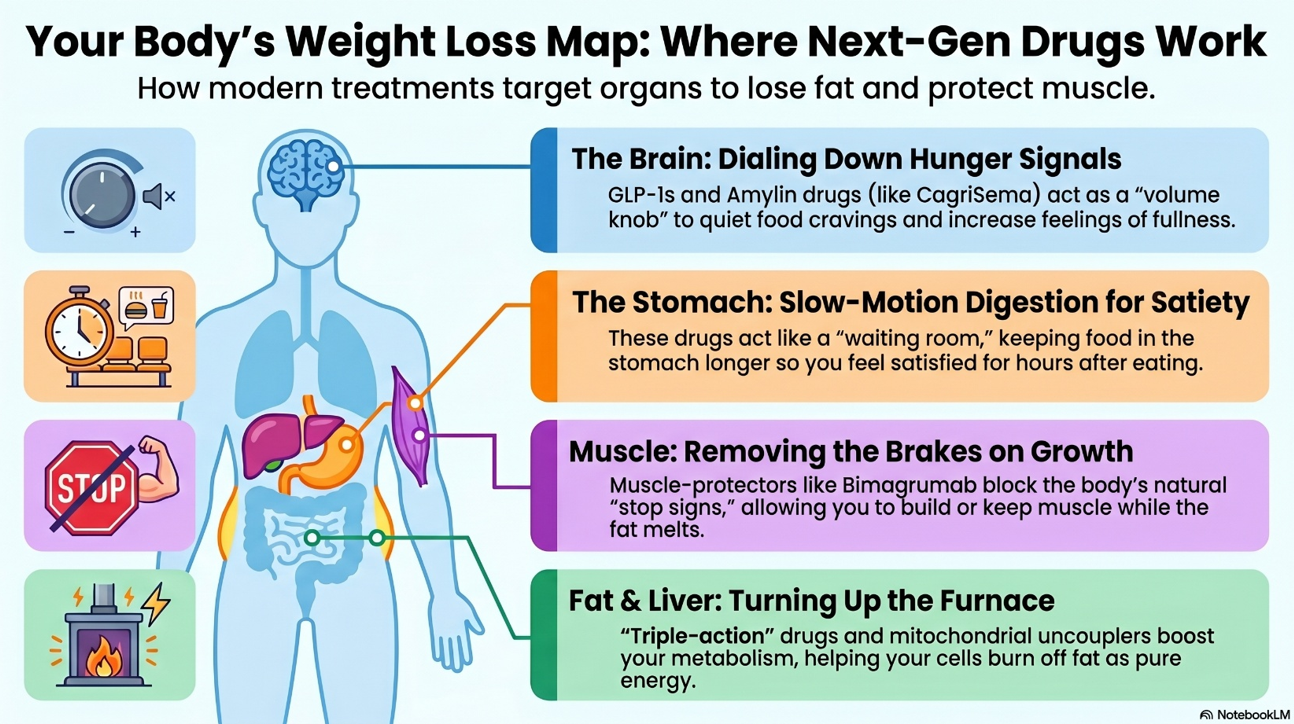
|



 RSS Feed


©2017 WeighingInBlog. All rights reserved. 401 Park Drive, Boston, MA